How to Reduce Thermal Bath Utility Costs: A Strategic Efficiency Guide
The thermal bath, an ancient architectural and therapeutic marvel, represents one of the most energy-intensive operations in the modern hospitality and wellness sector. Unlike standard pool facilities, a thermal circuit demands the continuous maintenance of specific, high-temperature water bodies, sophisticated air-handling systems to manage humidity, and intensive filtration protocols to ensure hygiene in mineral-rich environments. As energy volatility becomes a permanent fixture of global markets, the fiscal viability of these facilities increasingly depends on their ability to transition from “brute-force heating” to integrated energy management systems.
For the asset manager or lead engineer, the challenge is not merely one of insulation, but of thermodynamic orchestration. Every BTU (British Thermal Unit) introduced into the system should, ideally, perform multiple tasks—heating the water, tempering the ambient air, and eventually being harvested via heat exchangers before it is discharged. This systemic approach is necessary because thermal baths are not static bodies of water; they are open systems subject to constant evaporation, guest-load fluctuations, and environmental heat loss.
Reducing overhead in this sector requires a departure from traditional “siloed” thinking, where water, electricity, and gas are managed as independent line items. Instead, a sophisticated editorial approach to facility management views the thermal bath as a heat-exchange network. Success in this domain is found in the optimization of the delta—the difference between the heat source and the target environment—and the mitigation of “unintended cooling” through technical precision and behavioral engineering.
Understanding “how to reduce thermal bath utility costs.s”
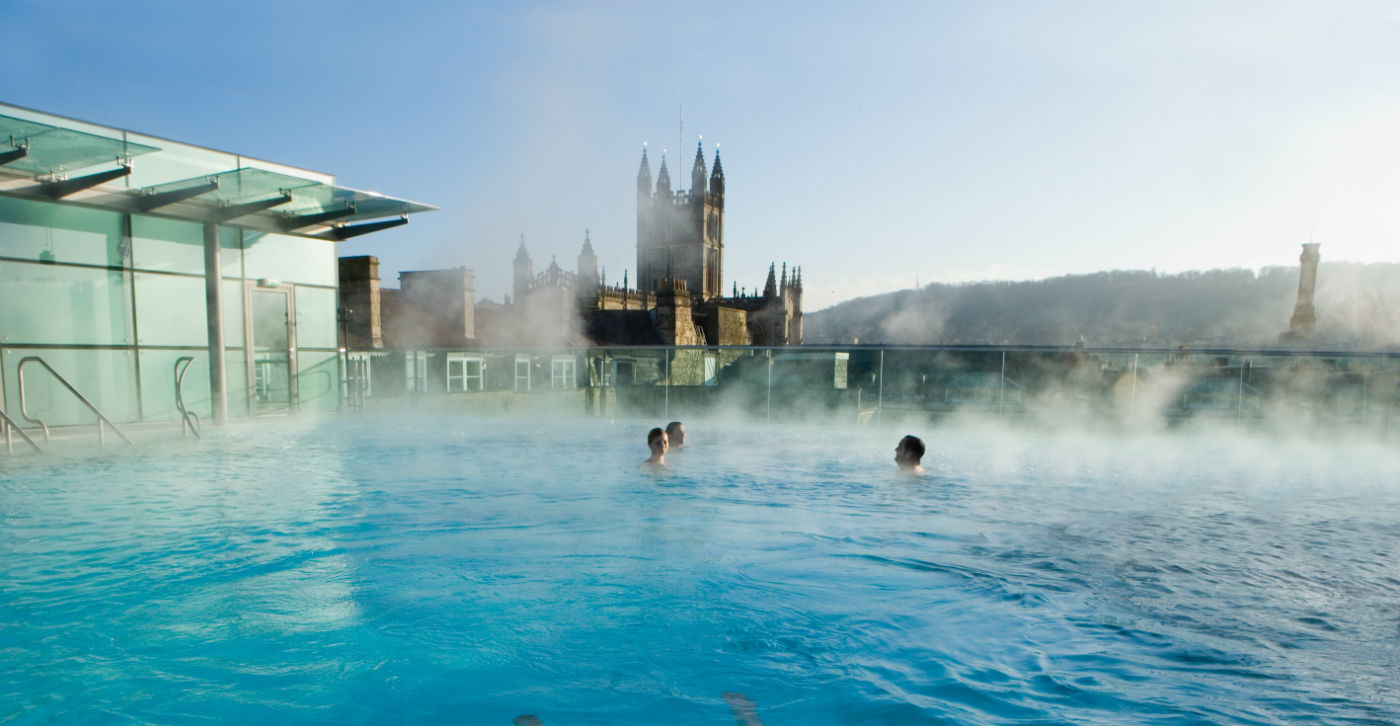
The inquiry into how to reduce thermal bath utility costs often begins with a search for a “silver bullet” technology, such as a more efficient boiler or a new pool cover. However, this perspective oversimplifies the physics of the environment. True cost reduction is a multidimensional discipline that balances thermodynamic laws with guest comfort standards. A frequent misunderstanding is the belief that “reducing costs” must involve lowering water temperatures. While lowering a pool’s temperature by $1°C$ can reduce energy consumption by roughly $10\%$, it can also lead to a catastrophic decline in guest satisfaction and “time-on-site” metrics, eventually eroding RevPAG (Revenue Per Available Guest).
The risk of oversimplification lies in ignoring the “Latent Heat of Evaporation.” In a thermal bath environment, the majority of heat loss does not occur through the walls or the floor; it occurs at the surface of the water as it turns into vapor. This vapor then places an immense load on the HVAC (Heating, Ventilation, and Air Conditioning) system, which must work to dehumidify the air to prevent structural mold and guest discomfort. Therefore, any strategy aimed at utility reduction must address the air and water as a single, linked system.
Effectively managing these costs demands a granular approach that adapts to the specific business model and geographical climate of the facility. It requires a shift from “reactive maintenance” to “predictive thermal load management.” Understanding how to reduce thermal bath utility costs is, in essence, an exercise in identifying and closing “thermal leaks” across the entire architectural envelope.
Deep Contextual Background: From Geothermal Direct-Use to Smart Systems
Historically, thermal baths were sited based on proximity to natural heat sources. In ancient Rome or Ottoman-era Budapest, the utility cost was effectively zero, as the water emerged from the earth at the required temperature. The primary expense was the labor of cleaning and the maintenance of the stone structures. However, as the “spa” concept migrated away from geothermal vents and into urban hotels and high-end resorts, the industry became reliant on fossil fuels and, nd later, electricity, to simulate these natural conditions.
The late 20th century saw a period of “cheap energy,” where facilities were designed for aesthetic impact rather than thermal retention. Grand glass atriums and high-volume waterfalls became standard, despite being massive “heat sinks.” Today, we are in a period of “Energy Correction.” Modern facilities are reverting to more enclosed, thermally massive designs, and existing facilities are being retrofitted with “Recovered Energy” systems. This evolution reflects a broader movement toward “Net-Zero Wellness,” where the goal is to create a closed-loop system that mimics the efficiency of a natural geothermal spring.
Conceptual Frameworks and Mental Models
To master the logistics of thermal efficiency, management can utilize several specific mental models:
-
The Thermal Cascade: This framework suggests that heat should be used in descending order of intensity. For example, the primary heat source first warms the hottest pools (e.g., $40°C$ ), then the “spent” water or heat is used to warm the temperate pools ($34°C$ ), then the relaxation room floors, and finally pre-warms the incoming fresh water.
-
The Evaporative Barrier Model: This model views the water surface as a “gate” that must be kept closed as much as possible. It prioritizes surface-tension reduction and physical covers to prevent the “leakage” of energy into the air.
-
The Delta-T ($ΔT$) Optimization: This focuses on the difference between the ambient air temperature and the water temperature. If the air is significantly colder than the water, evaporation accelerates. Managing this “Delta” is the most effective way to lower the load on dehumidification systems.
-
The “Thermal Flywheel” Effect: This involves using the thermal mass of the building (stone, concrete, water) to store energy during off-peak hours (when electricity is cheaper) and slowly release it during peak operational hours.
Key Categories of Utility Expenditure and Trade-offs
Utility reduction in a spa context must be segmented to identify where the highest ROI (Return on Investment) exists.
| Category | Typical High-Cost Driver | The Efficiency Pivot | Primary Trade-off |
| Water Heating | Constant reheating of outdoor pools | Variable Speed Drives (VSDs) & Heat Pumps | Upfront CapEx vs. OpEx savings |
| Air Management | 24/7 high-volume dehumidification | Heat Recovery Ventilators (HRVs) | Air quality perception vs. Heat loss |
| Filtration | High-pressure pumps running 24/7 | Glass media & frequency-controlled pumps | Filtration speed vs. Electricity usage |
| Water Loss | Evaporation & frequent “backwash.ing” | Automated covers & backwash recovery | Guest convenience vs. Water/Heat retention |
| Lighting | Underwater & high-ceiling halogen | Smart LED arrays with dimming | Aesthetic “warmth” vs. Energy load |
Realistic Decision Logic
The decision to invest in a specific efficiency measure should follow a “Payload Analysis.” For instance, an outdoor thermal pool in a cold climate will derive 80% of its savings from a high-quality automated cover. Conversely, an indoor thermal circuit in a humid climate will find its greatest savings in an updated HVAC system with advanced heat recovery. Therefore, the specific environment dictates the most effective strategy. Furthermore, managers must tailor their investments to these local conditions to ensure the highest return on investment. The “Aesthetic of Movement” (waterfalls and jets) is often the first “luxury” that must be audited, as these features massively increase evaporation and noise-related energy load.
Detailed Real-World Scenarios
The Outdoor Thermal Infinity Pool
A mountain resort experienced massive heat loss in its flagship outdoor pool during winter nights. By installing an automated slatted cover and reducing the water temperature by just $1.5°C$ between 11:00 PM and 6:00 AM, the facility reduced its gas consumption by $22\%$.
-
The Logic: Preventing the “Latent Heat” loss during non-operational hours.
-
Failure Mode: If the cover mechanism freezes due to poor drainage, the repair cost can negate the energy savings.
The HVAC Heat-Recovery Retrofit
An urban spa was spending $40\%$ of its utility budget on air conditioning and dehumidification. They installed an air-to-water heat pump that captures the heat removed during dehumidification and pumps it back into the pre-heating system for the showers.
-
The Logic: Turning a “waste product” (heat from dehumidification) into a “resource.”
-
Second-Order Effect: Reduced wear and tear on the primary boilers, extending their lifespan.
Variable Speed Pump Optimization
A large thermal complex was running all pool pumps at $100\%$ capacity $24$ hours a day. By switching to VSDs (Variable Speed Drives) and reducing flow by $20\%$ during low-occupancy periods, they achieved a $50\%$ reduction in electricity usage for filtration.
-
Decision Point: Ensuring the flow remains high enough to meet health department turnover requirements.
Planning, Cost, and Resource Dynamics
The financial planning for how to reduce thermal bath utility costs requires a distinction between “Static” and “Dynamic” costs.
| Expense Type | Cost Range (Percentage of OpEx) | Impact of Optimization |
| Gas/Heating Oil | $45\% – 60\%$ | Very High (Thermal Retention) |
| Electricity (Pumps/Fans) | $20\% – 30\%$ | High (VSD/Automation) |
| Water & Sewer | $10\% – 15\%$ | Moderate (Filtration/Recovery) |
| Maintenance/Chemicals | $5\% – 10\%$ | Low (Precision Dosing) |
Opportunity cost is a silent factor here. A facility that refuses to invest in energy-saving automation may be forced to raise entry prices, which in a competitive market can lead to a “death spiral” of lower occupancy and higher per-guest costs.
Tools, Strategies, and Support Systems
-
BMS (Building Management Systems): Centralized software that allows for the precise scheduling of temperatures and ventilation based on occupancy.
-
Heat Recovery Ventilators (HRVs): Essential for indoor baths to ensure that fresh air is pre-warmed by outgoing exhaust air.
-
Variable Speed Drives (VSD): Allowing motors to run at the minimum speed necessary to maintain water quality.
-
Liquid Pool Covers: An invisible chemical barrier that reduces evaporation by up to $40\%$ in pools where a physical cover is not architecturally feasible.
-
Thermal Imaging Audits: Using infrared cameras to identify “cold bridges” in the building’s insulation.
-
Ozone or UV Filtration: Reducing the need for high-volume fresh water “dilution” by providing more effective chemical-free sanitation.
-
Greywater Reclamation: Treating and using shower or backwash water for irrigation or toilet flushing to lower sewer fees.
-
Sub-Metering: Installing meters on individual pools to identify which specific body of water is leaking heat or water.
Risk Landscape and Failure Modes
The primary risk in cost reduction is “Biological Risk.” If water turnover or temperature is reduced too aggressively, the risk of Legionella or other bacterial blooms increases.
Compounding Risks include:
-
Structural Degradation: If the HVAC system is throttled too far to save energy, humidity levels rise, leading to wood rot, metal corrosion, and mold within the building’s envelope.
-
Equipment Cavitation: Running pumps at speeds that are too low can cause air bubbles and physical damage to the impellers.
-
The “Penny-Wise, Pound-Foolish” Trap: Buying cheap insulation or covers that degrade quickly under the harsh, humid, and chemical-laden environment of a thermal bath.
Governance, Maintenance, and Long-Term Adaptation
To ensure that strategies for how to reduce thermal bath utility costs remain effective over the long term, a “Governance Ledger” is required.
The Layered Checklist for Engineers:
-
Daily: Monitor $ΔT$ (air-to-water) and ensure all covers are deployed immediately upon closing.
-
Weekly: Inspect heat exchanger plates for “scaling” (mineral buildup from thermal water), which drastically reduces efficiency.
-
Monthly: Calibrate all temperature and occupancy sensors to ensure the BMS is receiving accurate data.
-
Annually: Conduct a “Full-Circuit Thermal Audit” to identify new inefficiencies as equipment ages.
Adaptation triggers should be established: if energy costs per guest-hour increase by more than $10\%$ beyond seasonal norms, a system-wide leak and sensor audit must be triggered.
Measurement, Tracking, and Evaluation
A successful program uses both “Leading” and “Lagging” indicators to evaluate efficiency.
-
Leading Indicators: Real-time BTU consumption per gallon of water turnover; average humidity levels in the atrium; pump RPMs relative to occupancy.
-
Lagging Indicators: Total utility bill as a percentage of revenue; average lifespan of HVAC filters; water replacement volume per month.
Documentation Examples:
-
The Thermal Efficiency Curve: A graph showing energy usage relative to outdoor ambient temperature, used to predict future budget needs.
-
The “Backwash Log”: Tracking the volume of heated water sent to the sewer to justify the purchase of a backwash recovery system.
-
Guest Satisfaction Correlation: Mapping energy-saving periods against guest reviews to ensure “efficiency” isn’t being mistaken for “a cold pool.”
Common Misconceptions and Oversimplifications
-
Myth: Turning the heaters off at night saves the most money. Correction: Reheating a massive thermal body of water from $20°C$ back to $38°C$ often consumes more energy than maintaining it at $34°C$ with a cover.
-
Myth: High-tech glass is a good insulator. Correction: Even high-spec glass is a poor insulator compared to a solid wall; grand glass designs are almost always the biggest “utility leaks.”
-
Myth: More chemicals mean less water usage. Correction: Over-chemicalization leads to high TDS (Total Dissolved Solids), which eventually requires a “dump and fill” of the entire pool.
-
Myth: Solar heating is enough for thermal baths. Correction: Solar is excellent for temperate pools, but the “energy density” required for $38°C$ thermal circuits usually requires a consistent gas or heat pump source as a primary.
Ethical and Practical Considerations
In the pursuit of utility reduction, managers must ensure that the ethical responsibility toward “Public Health” remains paramount. Specifically, reducing energy cannot come at the cost of water hygiene. Furthermore, there is a vital “Staff Comfort” component to consider, since engineers and housekeeping staff often work in these high-humidity environments.
Consequently, making drastic changes to air handling can lead to poor air quality for employees. To avoid this, any “Green” initiative should be communicated clearly to guests. Indeed, most modern travelers are willing to accept a “covered pool” at night if they understand it is part of a sustainable, low-carbon wellness strategy. In this way, transparency builds both trust and environmental efficiency.
Conclusion: The Integrated Thermal Future
Success in this field requires patience. Furthermore, it demands a commitment to the “Small Gains” philosophy. For instance, a 2% saving in pump speed and a 5% reduction in evaporation can lead to major results. When combined with a 10% recovery in heat-exchange efficiency, these gains represent the difference between a struggling asset and a high-performance flagship.
Ultimately, the thermal bath of the future is a place where the water stays hot, and the air remains clear. In this model, energy is not used just once; rather, it is recycled many times over.