Spa Hotel Design Ideas: An Editorial Guide to Wellness Architecture
The global hospitality landscape is currently undergoing a “Quiet Revolution,” where the metric of luxury is shifting from decorative opulence to biological performance. In this new era, spa hotel design ideas are no longer merely about aesthetic choices or the selection of premium materials; they are about the engineering of “Human Optimization Environments.” As urban density increases and digital saturation reaches a critical threshold, the role of the spa hotel has evolved from a place of temporary leisure into a vital piece of infrastructure for neurological and physiological recovery.
This systemic transition requires a departure from traditional hospitality architecture. The modern guest seeks more than a treatment room; they seek a “Sensory Reset.” This involves the deliberate manipulation of light spectra, acoustic frequencies, and air quality to facilitate a shift from the sympathetic (fight-or-flight) to the parasympathetic (rest-and-digest) nervous system. To achieve this, designers must move beyond surface-level trends and embrace “Deep Biophilia,” a design philosophy that integrates the evolutionary needs of the human organism into the built environment.
Designing for wellness in 2026 demands a sophisticated understanding of “Circadian Architecture” and “Acoustic Seclusion.” The challenge lies in creating a space that feels both technologically advanced and primordially safe. This editorial analysis deconstructs the structural, operational, and psychological frameworks required to execute a world-class wellness destination, providing a rigorous reference for architects, developers, and strategists aiming to define the next generation of restorative hospitality.
Understanding “spa hotel design ideas”
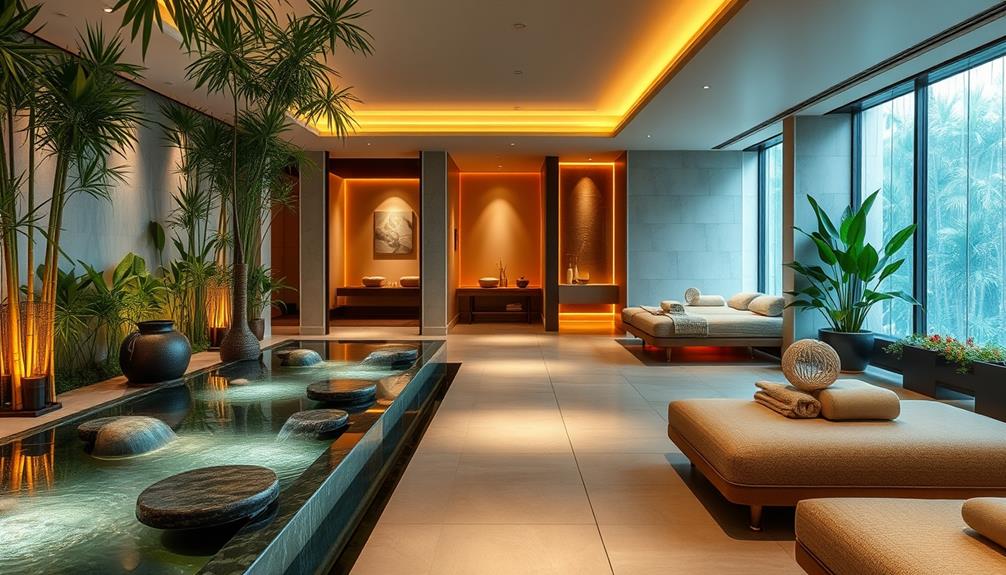
To effectively engage with spa hotel design ideas, one must first dismantle the prevailing misconception that spa design is a subset of interior decoration. In a professional context, it is a discipline of “Environmental Psychology” and “Mechanical Engineering.” A common error in development is the “Add-On” approach,h where a spa is inserted into an existing hotel footprint as a secondary amenity. True authority in this space requires a “Ground-Up” philosophy, where the entire building envelope is treated as a membrane for health.
The risk of oversimplification arises when designers focus on “Visual Wellness” (the use of wood, plants, and soft colors) while neglecting the “Invisible Infrastructure.” An exclusive spa hotel can have the most beautiful treatment rooms in the world, but if the acoustic isolation is insufficient or the HVAC system circulates allergens and stale air, the biological objective of the stay is compromised. Exclusivity is thus redefined as “Atmospheric Purity.”
Effectively evaluating design ideas requires a “Systems Thinking” perspective. One must distinguish between “Active Interventions” such as a high-tech bio-hacking suite and “Passive Interventions” such as the orientation of a building to maximize morning sun exposure. The most successful modern designs are those that achieve “Interventional Coherence,” where every design choice, from the floor’s thermal conductivity to the ceiling’s acoustic NRC (Noise Reduction Coefficient), supports a singular goal: the reduction of the guest’s internal stress load.
Deep Contextual Background: From Hydropathy to Bio-Hacking
The evolution of spa architecture in the United States and Europe has moved through four distinct “Axioms of Healing.” The first, the “Hydropathic Era” (19th century), centered on the “Sanatorium Model.” These facilities were built around mineral springs, utilizing massive stone structures to convey a sense of permanence and mineral-rich purity. Architecture was a tool for “Containment and Cure,” with highly regimented spatial flows that mimicked medical wards.
The “Leisure-Social Era” (1960s–1990s) saw the rise of the “Resort Spa.” Here, the architecture shifted toward “Exoticism and Escapism.” Design ideas often leaned into themed environments, such as Mediterranean, Zen, and Tropical, that served as a theatrical backdrop for relaxation. The goal was to transport the guest away from their reality, rather than to optimize their internal state.
The “Boutique-Holistic Era” (2000s–2020) introduced “Soft Biophilia.” This period emphasized natural materials and open-plan layouts, moving away from the clinical feel of the past. However, these designs often prioritized Instagrammable aesthetics over deep physiological needs, leading to the rise of “Pseudo-Wellness” spaces that looked peaceful but functioned poorly under high occupancy.
We are currently entering the “Precision-Optimization Era” (2024–2026). Driven by advancements in “Wearable Tech” and “Longevity Science,” design is becoming “Responsive.” The modern spa hotel is a “Living Organism” equipped with sensors that adjust the environmental “Bio-Signature” temperature, light, and sound in real-time. This era is defined by “Invisible Integration,” where the technology that facilitates health is hidden behind a facade of hyper-natural, textural beauty.
Conceptual Frameworks and Mental Models
To navigate the complexity of modern spa design, architects should employ these three critical frameworks:
1. The “Allostatic Load” Reduction Model
Allostatic load refers to the cumulative “wear and tear” on the body due to chronic stress. In design, this model dictates that every environmental input (noise, glare, temperature fluctuation) is a stressor. The architect’s job is to create a “Low-Load Zone” where the nervous system can finally drop its guard. This is achieved through “Silent Architecture”—the use of decoupling materials and specialized ductwork to eliminate the “Industrial Hum” of modern buildings.
2. The “Circadian Anchoring” Framework
This model posits that human health is inextricably linked to the 24-hour light-dark cycle. Spa hotel design should facilitate “Circadian Entrainment” by providing high-intensity blue-spectrum light in the mornings (via floor-to-ceiling glass or specialized LED systems) and zero-blue-light “Amber Zones” in the evening. Rooms are designed with “Blackout Integrity” to ensure the production of endogenous melatonin is not interrupted by streetlights or hallway glow.
3. The “Biogenic Resonance” Index
This framework assesses the “Evolutionary Fit” of a space. It goes beyond placing a plant in a corner; it looks at “Fractal Geometry,” “Tactile Diversity,” and “Thermal Variability.” Human beings evolved in complex, non-linear environments. Designing with “Biogenic Resonance” involves using materials that age naturally (patina) and spatial volumes that provide both “Prospect” (a wide view for safety) and “Refuge” (a small, enclosed space for rest).
Key Categories of Spa Hotel Design and Operational Trade-offs
A successful project must choose its “Operational Anchor.” These categories dictate the spatial requirements and technical complexity of the build.
| Design Category | Primary Objective | Architectural Signature | Trade-off |
| Clinical-Holistic | Longevity/Diagnostics | Clean rooms, Lab-grade air | High energy consumption; Rigid feel |
| Thermal-Centric | Metabolic Stimulation | Complex plumbing, Stmasonrysory | High maintenance; High humidity risk |
| Neurological-Stillness | Stress De-escalation | Acoustic decoupling, Low-lumen | Low throughput; Specialized lighting |
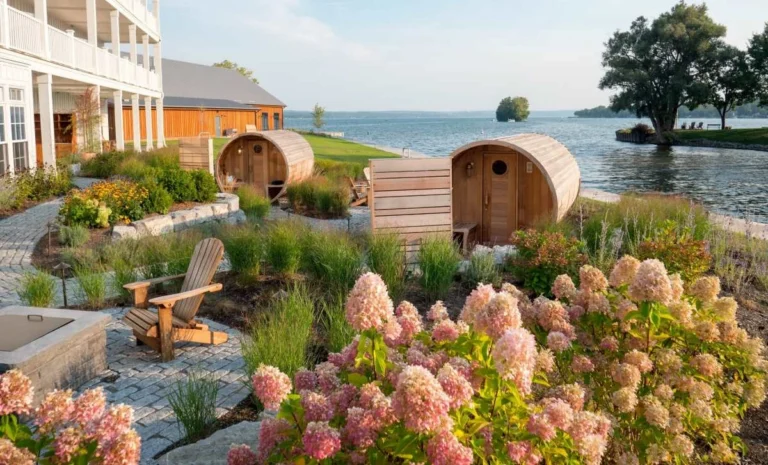
| Nature-Immersive | Rewilding/Ecology | Dispersed pods, Outdoor flow | High security/insect management |
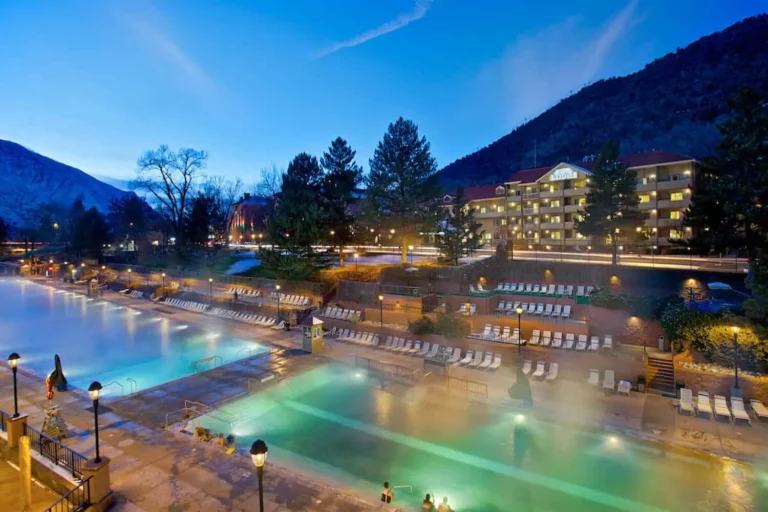
| Social-Wellbeing | Community Healing | Large communal “Fire & Ice” zones | Noise management challenges |
Realistic Decision Logic
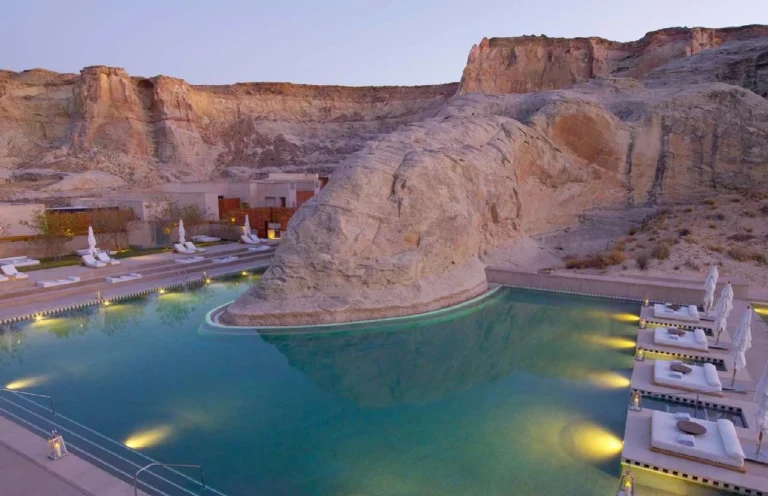
The choice of design category should follow a “Topographic Audit.” A coastal site naturally lends itself to “Nature-Immersive” designs where marine aerosols can be integrated into the HVAC system. An urban flagship, conversely, must prioritize “Neurological-Stillness” to combat the high baseline noise of the city. The spa hotel design ideas that fail are those that try to force a “Nature-Immersive” model into a 20-story high-rise without sufficient “Atmospheric Buffering.”
Detailed Real-World Scenarios
The Urban “Sanctuary” Retrofit
A developer wants to turn a mid-century office building into a high-end spa hotel.
-
The Constraint: Structural limitations on floor load (preventing heavy stone pools).
-
The Design Idea: Utilizing “Lightweight Composite Pools” and focusing on “Acoustic Seclusion” through double-wall partitions with recycled PET infill.
-
Failure Mode: If the designer neglects “Vibration Isolation” for the HVAC, the mechanical hum will transmit through the steel frame, ruining the meditation suites.
The “High-Alpine” Longevity Center
Designing for a site at an elevation of 8,000 feet.
-
The Logic: Using “Hypoxic-Ready” guest rooms that can simulate lower altitudes for better sleep.
-
The Strategy: Using “Thermal Massing” (rammed earth or thick stone) to store daytime solar heat for evening recovery.
-
Second-Order Effect: The high UV levels require specialized glass coatings that don’t block the “Good” spectrum (Far-red) needed for mitochondrial health.
Planning, Cost, and Resource Dynamics
The “Cost of Wellness” is fundamentally different from standard hospitality. It is “Back-of-House” heavy.
| Resource Category | Budget Weight | Key Direct Cost | Opportunity Cost |
| MEP (Mechanical/Electrical) | 35% – 45% | UV Air Filtration; Silent Ducting | Smaller guest room footprint |
| Technical Spa Equipment | 15% – 20% | Cryo-chambers; Float tanks | Specialized maintenance staff |
| Finishes & Materials | 20% – 25% | Natural stone; Anti-microbial wood | Longer lead times/Sourcing |
| FF&E (Furniture/Fixtures) | 10% – 15% | Circadian beds; Ergonomic seating | Frequent replacement of “Raw” items |
Range-Based Financial Outlook (2026 Baseline)
For a 50-key luxury wellness property, construction costs currently range from $800 to $1,500 per square foot. The variation is driven by the density of “Wet Areas” (saunas, pools, steam rooms) and the sophistication of the “Building Management System” (BMS) required for personalized room environments.
Tools, Strategies, and Support Systems
-
Neuro-Feedback Lighting: Integrated LEDs that shift spectrum based on the guest’s real-time biometric data (HRV).
-
Acoustic “Pink Noise” Generation: Hidden speakers in corridors that mask intrusive hallway sounds with low-frequency natural sounds.
-
Phase-Change Materials (PCM): Drywall and flooring that absorb heat during the day and release it at night to maintain a “Thermal Flatline.”
-
Hydro-Thermal Circuits: Precise “Pathing” design that moves a guest through Heat, Cold, and Rest cycles without backtracking.
-
Digital Detox Architecture: Copper-mesh “Faraday Cages” integrated into relaxation zones to naturally block cellular signals.
-
Bio-Mimetic Ventilation: Airflow designed to mimic “Natural Wind Flow” rather than the static “Jet-Stream” of traditional AC.
-
Smart-Surface Antimicrobials: Using copper and silver-ion infused materials for high-touch surfaces in wet areas.
Risk Landscape and Failure Modes
The primary risk in the current market is “Aesthetic Decoupling,” when the design looks like a spa but acts like a hotel.
Taxonomy of Risks:
-
The “Lobby Echo” Effect: Using hard, reflective materials in common areas that amplify sound and elevate guest stress levels before they reach the spa.
-
Thermal Bridging: Poor insulation in “Hot Zones” (saunas) causes condensation and mold in adjacent cold structural walls.
-
Maintenance Complexity: Designing high-tech “Experience Showers” that require specialized overseas parts, leading to “Out-of-Service” rooms for weeks.
-
The “Clinical Churn”: A design that is too sterile and hospital-like, failing to trigger the “Awe Response” necessary for psychological healing.
Governance, Maintenance, and Long-Term Adaptation
A wellness property is a “High-Degradation Environment.” High humidity, salt, and essential oils are corrosive. Governance must be architectural.
The “Lifecycle” Checklist:
-
Monthly Air Quality Audit: Testing for VOCs and mold spores in the “High-Humidity Zones.”
-
Bi-Annual Lighting Calibration: Ensuring the “Circadian Clock” of the building hasn’t drifted.
-
Acoustic Integrity Check: Testing for seals on acoustic doors that may have settled over time.
Adjustment triggers should be based on “Biometric Feedback.” If 20% of guests report “Poor Sleep” in a specific wing, the governance protocol triggers a “Thermal and Acoustic Audit” of those specific rooms.
Measurement, Tracking, and Evaluation
-
Leading Indicators: “Ambient Decibel Levels” in treatment zones (should not exceed 35dB) and “CO2 Saturation” in guest rooms (should remain below 600ppm).
-
Lagging Indicators: Guest “Sleep Quality Scores” via wearable integration and “Net Promoter Scores” (NPS) specifically focused on the “Restorative Impact” of the stay.
-
Documentation Example: The “Environmental Performance Log” is a daily digital record of the building’s “Vital Signs” (Air, Water, Light, Sound).
Common Misconceptions and Oversimplifications
-
Myth: “More plants equals better wellness.” Correction: Improperly managed indoor plants can increase humidity and allergens; “Biophilia” is about patterns, not just foliage.
-
Myth: “White is the color of cleanliness.” Correction: Over-bright white surfaces cause “Visual Glare,” which triggers a cortisol response in the brain.
-
Myth: “The spa is in the basement.” Correction: Basements lack “Circadian Light” and the “Prospect” view needed for psychological safety; the modern spa belongs on the “Brightest” floor.
-
Myth: “Technology is anti-wellness.” Correction: Technology is the “Invisible Servant” that enables the precision needed for a truly restorative environment.
-
Myth: “Natural stone is always best.” Correction: High-porosity stone (like some marbles) harbors bacteria in wet environments; “Engineered Stone” is often the more “Holistic” choice.
Conclusion: The Synthesis of Science and Spirit
The future of spa hotel design ideas lies in the elimination of the boundary between “Nature” and “Building.” As we move deeper into 2026, the industry is recognizing that the ultimate luxury is “Biological Equilibrium.” A successful spa hotel is not a collection of rooms; it is a “Synchronized System” designed to catch the human organism as it falls out of its daily chaos and gently guide it back to its natural rhythm.
This requires a designer who is as comfortable with a “Psychrometric Chart” as they are with a “Color Palette.” When we align the structural integrity of the building with the biological integrity of the human guest, we create something far more powerful than a hotel. We create a landmark of human health that stands as a definitive reference for what it means to truly “rest” in the modern world.