Wellness Hotel Architectural Overview: A Guide to Restorative Design
In the contemporary landscape of high-tier hospitality, the building envelope has transitioned from being a passive container for guests to an active participant in their physiological recovery. The modern wellness hotel is no longer a standard lodging facility with a spa appended to the lower levels; it is a specialized machine for “Human Optimization.” This shift necessitates a fundamental rethinking of spatial programming, material science, and mechanical engineering. As global stress levels reach a critical mass, the architecture of these spaces is being tasked with the heavy lifting of neurological down-regulation using light, sound, and air as primary building materials.
An authoritative approach to this sector requires a departure from purely aesthetic discourse. We are witnessing the emergence of “Interventional Architecture,” where the placement of a window or the acoustic decoupling of a floor slab is measured by its impact on the guest’s Heart Rate Variability (HRV) and cortisol suppression. In this context, luxury is redefined. It is no longer found in the decorative excess of the Gilded Age, but in the “Environmental Purity” of a space that can guarantee absolute silence, perfect air quality, and the precise entrainment of circadian rhythms.
The complexity of these projects lies in the tension between technological advancement and primordial comfort. To succeed, a wellness-focused structure must integrate medical-grade air filtration and circadian lighting systems without feeling clinical or sterile. It must be a “Governed Ecosystem” that feels like a natural sanctuary. This editorial deconstructs the structural frameworks of the industry, providing a rigorous technical and philosophical foundation for understanding how the built environment can facilitate profound biological transformation.
Understanding “wellness hotel architectural overview”
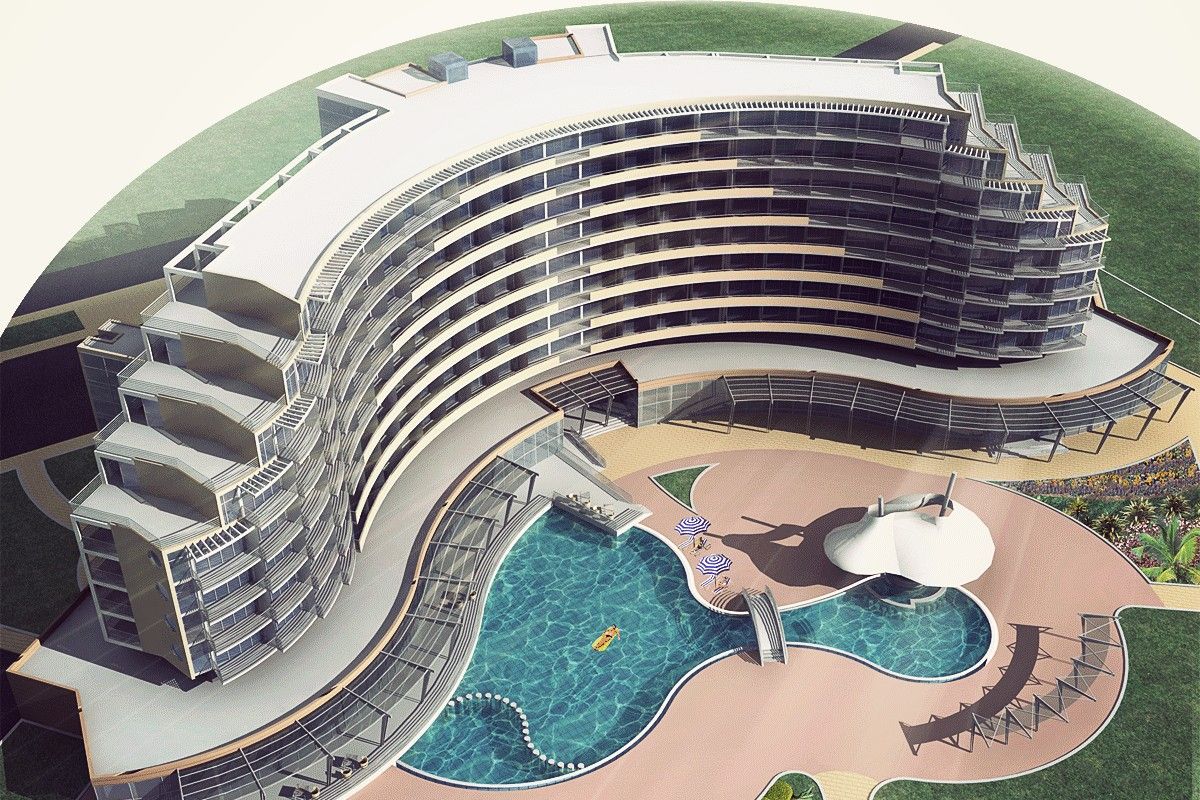
To provide a comprehensive wellness hotel architectural overview, one must first acknowledge that “Wellness” in architecture is often treated as a marketing veneer. A multi-perspective analysis reveals that a truly wellness-centered building is a systems-integration challenge. A common misunderstanding among developers is that “Wellness” can be achieved through interior design, adding plants, natural wood, and soft colors. While these elements aid psychological comfort, they do not address the systemic physiological stressors inherent in modern buildings, such as electromagnetic frequency (EMF) load, volatile organic compounds (VOCs), and acoustic leakage.
The risk of oversimplification arises when “Wellness Architecture” is equated with “Sustainable Architecture.” While they overlap, their objectives differ. Sustainability focuses on the building’s impact on the planet; wellness focuses on the building’s impact on the human organism. A building can be LEED Platinum but still have poor acoustic governance or lighting that disrupts melatonin production. Authority in this field requires a “Biology-First” approach, where every architectural decision is vetted against the “Evolutionary Fit” of the human body.
Effectively navigating this overview requires a “Systems Thinking” perspective. We must distinguish between “Active Restoration Zones,s” such as hydrotherapy circuits and medical suits, es and “Passive Restoration Zones,nes” such as guest rooms designed for deep sleep architecture. The most sophisticated modern hotels are those that achieve “Interventional Coherence,” where the mechanical, electrical, and plumbing (MEP) systems are perfectly synchronized with the architectural volume to create a “Stress-Free Envelope.”
Deep Contextual Background: From Sanatoriums to Bio-Hacking Sanctuaries
The lineage of wellness architecture is rooted in the “Sanatorium Era” of the 19th and early 20th centuries. Facilities such as those in Davos, Switzerland, or Battle Creek, Michigan, were built on the belief that “Climate and Light” were the primary agents of healing. These structures featured deep balconies for “Air Cures” and massive windows to maximize sunlight exposure. Architecture was not just a shelter; it was a prescription. This era established the foundational importance of “Orientation,tion” how a building relates to the sun and the prevailing winds.
The “Leisure Resort Era” (1960s–1990s) shifted the focus toward “Thematic Escapism.” Design ideas often leaned into theatrical environments that served as a backdrop for relaxation. However, these buildings often utilized standard industrial construction techniques, prioritizing speed and visual impact over environmental purity. The wellness was peripheral, located in basement spas that lacked natural light an,d air a structural contradiction to the goals of health.
We are currently in the “Precision-Optimization Era.” Driven by advancements in longevity science and neuro-architecture, the wellness hotel has become a “Living Organism.” Modern design utilizes “Responsive Envelopes” that adjust to the guest’s needs. This era is defined by the integration of “Bio-Hacking” tools into the very fabric of the building, red-light therapy integrated into bathroom mirrors, Faraday-cage mesh in bedroom walls, and pressurized oxygen delivery in high-altitude retreats. The architecture is no longer a backdrop; it is an active medical intervention.
Conceptual Frameworks: Circadian Anchoring and Biophilic Complexity
To evaluate the architecture of a wellness destination, architects and owners should utilize specific mental models:
1. The “Circadian Anchoring” Framework
This model posits that the primary role of a building is to entrain the guest’s biological clock. Architecture achieves this through “Light Governance.” In the morning, the building must provide high-intensity, blue-spectrum light (ideally through 100% natural daylighting) to trigger cortisol release. In the evening, it must transition to “Amber Zones” with zero blue light to protect melatonin production. A building that fails to manage this transition is a failed wellness environment.
2. The “Allostatic Load” Reduction Model
Allostasis is the body’s process of achieving stability through change. “Allostatic Load” is the cumulative wear and tear on the body due to chronic stress. In architectural terms, every environmental input, such as noise, glare, and temperature fluctuation, is a stressor. The architect’s job is to create a “Low-Load Zone” by utilizing “Silent MEP” systems and high-performance acoustic decoupling.
3. The “Biogenic Resonance” Index
This framework assesses the “Evolutionary Fit” of a space. It goes beyond placing a plant in a corner; it looks at “Fractal Geometry,” “Tactile Diversity,” and “Thermal Variability.” Human beings evolved in complex, non-linear environments. Designing with “Biogenic Resonance” involves using materials that age naturally and spatial volumes that provide both “Prospect” (a wide view for safety) and “Refuge” (a small, enclosed space for rest).
Key Categories of Wellness Architecture and Operational Trade-offs
A successful wellness hotel must choose its “Operational Anchor,” which dictates the spatial requirements and technical complexity of the build.
| Design Category | Primary Focus | Architectural Signature | Operational Trade-off |
| Medical-Longevity | Diagnostics/Intervention | Lab-grade air; Clean rooms | Can feel “clinical” and cold |
| Nature-Immersive | Rewilding/Ecology | Dispersed pods; Indoor/Outdoor flow | High security/insect management |
| Thermal-Centric | Hydrotherapy/Metabolic | Complex plumbing; Stone masonry | High maintenance; Humidity risk |
| Neurological-Stillness | Stress/Sleep | Acoustic decoupling; Low-lumen | Low throughput; Specialized lighting |
| Social-Wellbeing | Community/Connection | Large communal “Fire & Ice” zones | Noise management challenges |
Realistic Decision Logic
The choice of design category should follow a “Topographic Audit.” A coastal site naturally lends itself to “Nature-Immersive” designs where marine aerosols can be integrated into the ventilation system. An urban flagship, conversely, must prioritize “Neurological-Stillness” to combat the high baseline noise and “Light Pollution” of the city. The architectural failure occurs when a designer tries to force a dispersed “Nature” model into a high-rise without sufficient “Atmospheric Buffering.”
Detailed Real-World Scenarios
The Urban “Neuro-Sanctuary”
A developer wants to turn a mid-century office building into a high-end wellness hotel in a noisy metropolitan area.
-
The Constraint: Structural vibrations from a nearby subway line.
-
The Solution: “Box-in-Box” construction for guest rooms, utilizing spring-mounted floors and double-stud walls with recycled PET acoustic infill.
-
Failure Mode: If the designer neglects “Vibration Isolation” for the HVAC, the mechanical hum will transmit through the steel frame, ruining the deep-sleep protocols.
The “High-Alpine” Longevity Center
Designing for a site at an elevation of 8,000 feet where guests seek recovery.
-
The Logic: Using “Hypoxic-Ready” guest rooms that can simulate lower altitudes for better sleep.
-
The Strategy: Using “Thermal Massing” (rammed earth or thick stone) to store daytime solar heat for evening recovery, reducing the need for noisy air-forced heating.
-
Second-Order Effect: The high UV levels require specialized glass coatings that don’t block the “Far-red” spectrum needed for mitochondrial health.
Planning, Cost, and Resource Dynamics
The “Cost of Wellness” is fundamentally different from standard hospitality. It is “Back-of-House” heavy.
| Resource Category | Budget Weight | Key Direct Cost | Opportunity Cost |
| MEP (Mechanical/Electrical) | 35% – 45% | UV Air Filtration; Silent Ducting | Smaller guest room footprint |
| Technical Equipment | 15% – 20% | Cryo-chambers; Float tanks | Specialized maintenance staff |
| Finishes & Materials | 20% – 25% | Natural stone; Anti-microbial wood | Longer lead times/Sourcing |
| FF&E (Furniture/Fixtures) | 10% – 15% | Circadian beds; Ergonomic seating | Frequent replacement of “Raw” items |
Range-Based Financial Outlook (2026 Baseline)
For a 100-key luxury wellness property, construction costs currently range from $900 to $1,800 per square foot. The density of “Wet Areas” (saunas, pools, steam rooms) drives these operational variations. Specifically, these facilities require a sophisticated “Building Management System” (BMS). Notably, the BMS manages personalized room environments for each guest. By doing so, the system maintains a high-fidelity biological atmosphere. Consequently, the infrastructure serves as an active tool for physiological regulation.
Tools, Strategies, and Support Systems
-
Phase-Change Materials (PCM): Drywall and flooring that absorb heat during the day and release it at night to maintain a “Thermal Flatline” for better sleep.
-
Acoustic “Pink Noise” Generation: Hidden speakers in corridors that mask intrusive hallway sounds with low-frequency natural sounds.
-
Neuro-Feedback Lighting: Integrated LEDs that shift spectrum based on the guest’s real-time biometric data.
-
Digital-Detox Architecture: Copper-mesh “Faraday Cages” integrated into the walls of meditation zones to naturally block cellular signals.
-
Smart-Surface Antimicrobials: Using copper and silver-ion infused materials for high-touch surfaces in wet areas.
-
Bio-Mimetic Ventilation: Airflow designed to mimic “Natural Wind Flow” rather than the static “Jet-Stream” of traditional AC.
-
Water Mineralization Plants: On-site systems that customize the mineral content of water in showers and pools based on local geogenic signatures.
Risk Landscape and Failure Modes
The primary risk in the current market is “Visible Wellness,” where the design looks like a spa but acts like a hotel.
Taxonomy of Risks:
-
The “Lobby Echo” Effect: Using hard, reflective materials in common areas that amplify sound, elevating guest stress levels before they reach the spa.
-
Thermal Bridging: Poor insulation in “Hot Zones” (saunas) causes condensation and mold in adjacent cold structural walls.
-
Maintenance Complexity: Designing high-tech “Experience Showers” that require specialized overseas parts, leading to “Out-of-Service” rooms for weeks.
-
The “Clinical Churn”: A design that is too sterile and hospital-like, failing to trigger the “Awe Response” necessary for psychological healing.
Governance, Maintenance, and Long-Term Adaptation
A wellness property is a “High-Degradation Environment.” High humidity, salt, and essential oils are corrosive. Governance must be architectural.
The “Lifecycle” Checklist:
-
Monthly Air Quality Audit: Testing for VOCs and mold spores in “High-Humidity Zones.”
-
Bi-Annual Lighting Calibration: Ensuring the “Circadian Clock” of the building hasn’t drifted due to LED degradation.
-
Acoustic Integrity Check: Testing for seals on acoustic doors that may have settled over time.
Adjustment triggers should be based on “Biometric Feedback.” If guests report poor sleep in a specific wing, the governance protocol triggers a “Thermal and Acoustic Audit” of those specific rooms.
Measurement, Tracking, and Evaluation
-
Leading Indicators: “Ambient Decibel Levels” in treatment zones (should not exceed 35dB) and “CO2 Saturation” in guest rooms (should remain below 600ppm).
-
Lagging Indicators: Guest “Sleep Quality Scores” via wearable integration and “Net Promoter Scores” (NPS) specifically focused on the “Restorative Impact” of the stay.
-
Documentation Example: The “Environmental Performance Log” is a daily digital record of the building’s “Vital Signs” (Air, Water, Light, Sound).
Common Misconceptions and Oversimplifications
-
Myth: “More plants equals better wellness.” Correction: Improperly managed indoor plants can increase humidity and mold; “Biophilia” is about patterns, not just foliage.
-
Myth: “White is the color of cleanliness.” Correction: Over-bright white surfaces cause “Visual Glare,” which triggers a stress response in the brain.
-
Myth: “Technology is anti-wellness.” Correction: Technology is the “Invisible Servant” that enables the precision needed for a truly restorative environment.
-
Myth: “The spa belongs in the basement.” Correction: Basements lack the “Circadian Light” and “Prospect” view needed for psychological safety; the modern spa belongs on the “Brightest” floor.
-
Myth: “Natural stone is always best.” Correction: High-porosity stone (like some marbles) harbors bacteria in wet environments; “Engineered Stone” is often the more “Holistic” choice.
Conclusion: The Synthesis of Science and Spirit
The future of the wellness hotel architectural overview lies in the elimination of the boundary between “Nature” and “Building.” As we move deeper into 2026, the industry is recognizing that the ultimate luxury is “Biological Equilibrium.” Notably, a successful wellness hotel functions as more than a collection of rooms. Instead, it operates as a “Synchronized System.” Specifically, this system catches the human organism as it falls out of its daily chaos. Consequently, the environment gently guides the guest back to their natural rhythm. By doing so, the facility restores biological equilibrium through intentional architecture.
This requires a designer who is as comfortable with a “Psychrometric Chart” as they are with a “Color Palette.” When we align the structural integrity of the building with the biological integrity of the human guest, we create something far more powerful than a hotel. We create a landmark of human health that stands as a definitive reference for what it means to truly “rest” in the modern world.