Spa Hotel Vacation Planning Tips: A Guide to Systemic Restoration
The transition from a high-output professional existence to a state of profound physiological restoration is rarely the result of chance. In the current landscape of high-tier travel, where the “wellness” label is applied to everything from basic hotel gyms to advanced longevity clinics, the burden of discernment has shifted entirely to the traveler. A successful restorative stay is no longer defined by the mere presence of luxury amenities; it is defined by the “Interventional Alignment” between the facility’s capabilities and the individual’s specific biological and neurological deficits.
This systemic complexity necessitates a move away from traditional “holiday” thinking and toward a model of “Biological Governance.” When we consider the investment of both financial capital and, more importantly, the finite resource of time, the planning process must be viewed as a technical discipline. A stay that fails to account for variables such as circadian disruption, acoustic pollution at the destination, or the “Re-entry Friction” of returning to the default world is, fundamentally, a failed investment.
The following analysis deconstructs the mechanics of wellness preparation, moving beyond surface-level suggestions to explore the structural frameworks required for deep restoration. We examine the evolution of the restorative stay, the mental models necessary for objective evaluation, and the operational risks that frequently compromise even the most expensive travel itineraries. This is a definitive reference for those who view travel not as an escape from life, but as a strategic recalibration of the human organism.
Understanding “spa hotel vacation planning tips”

To effectively engage with spa hotel vacation planning tips, one must first dismantle the prevailing misconception that a “spa hotel” is a singular, monolithic category. In a professional editorial context, these tips are not mere suggestions for packing or booking; they are a set of “Operational Constraints” designed to ensure the integrity of a recovery period. A multi-perspective view reveals that wellness planning is an exercise in “Environmental Management.” If the goal is a neurological reset, but the chosen hotel is located in a high-traffic urban zone with poor acoustic dampening, the planning phase has failed regardless of the quality of the massages.
The risk of oversimplification arises when travelers treat wellness as an “add-on” to a standard vacation. A common error is the “Mixed-Intent” itinerary, attempting to combine high-intensity sightseeing with deep-tissue recovery. These two modes of travel operate on different physiological planes; one increases sensory input, while the other seeks to prune it. True authority in planning requires the courage to prioritize “Subtraction” over “Addition,” recognizing that the most valuable asset a hotel can provide is the absence of stimulus.
Furthermore, one must evaluate “Service Density” vs. “Space Density.” A hotel may offer fifty different treatments, but if the communal relaxation areas are overcrowded, the “Social Load” on the guest remains high. The most sophisticated planning strategies prioritize “Privacy-First Architecture,” where the guest can move from their suite to the treatment floor without navigating public lobbies or convention spaces. Understanding this distinction is the primary factor in ensuring that a “vacation” actually results in “restoration.”
Deep Contextual Background: From Sanatoriums to Precision Bio-Hacking
The American and European traditions of restorative travel have moved through three distinct “Eras of Intent.” The first, the “Climatic Era” (late 19th to early 20th century), was built on the concept of the sanatorium. Locations like Davos in Switzerland or Saranac Lake in New York were selected for their “Atmospheric Purity.” The wellness was passive; it was believed that the air, the water, and the altitude did the work of healing. This era established the foundational importance of “Geography as Medicine.”
The “Leisure-Social Era” (1970s–2010s) saw the rise of the “Destination Spa.” Here, the focus shifted toward aesthetic maintenance and “Stress Management.” This was the era of the cucumber water, the white robe, and the standardization of the “Spa Menu.” While these resorts introduced high-end luxury, they often functioned as “Islands of Leisure” that lacked a rigorous connection to the guests’ long-term health metrics. The focus was on the feeling of being pampered rather than the outcome of being optimized.
We are currently in the “Precision-Optimization Era.” Driven by advancements in longevity science and wearable technology, the spa hotel vacation planning tips of 2026 focus on “Data-Driven Personalization.” Modern guests are no longer looking for a generic experience; they are looking for a “Systemic Reset” that addresses specific biomarkers, cortisol levels, heart rate variability (HRV), and inflammatory markers. The hotel has become a clinical-holistic hybrid, functioning as a “Protective Envelope” where every variable, from the lighting spectrum to the mineral content of the food, is under governance.
Conceptual Frameworks: Allostatic Load and The Sensory Buffer
To navigate the high-tier wellness market, travelers should utilize specific mental models to evaluate potential destinations:
1. The “Allostatic Load” Model
Allostasis is the body’s process of achieving stability through change. “Allostatic Load” is the cumulative wear and tear on the body due to chronic stress. A premier wellness stay should function as a “Load-Shedding” event. When planning, one must ask: Does this destination remove more stressors than it introduces? If the travel logistics (long flights, complex transfers) add 40 units of stress and the hotel removes 30, the net result is negative.
2. The “Sensory Buffer” Index
This framework assesses the hotel’s ability to protect the guest from “Environmental Leakage.” This includes “Acoustic Integrity” (can you hear the hallway?), “Luminous Integrity” (is there blue light in the sleeping zone?), and “Social Integrity” (are you forced to interact with non-wellness guests?). The higher the buffer index, the more effective the neurological reset.
3. The “Bio-Regional Resonance” Framework
This model suggests that the human body recovers most efficiently when it is in “Resonance” with its immediate environment. This involves eating “Hyper-Local” foods that match the season and utilizing “Geogenic” minerals found in local waters. A spa in Arizona using seaweed from the Atlantic is a “Dissonant” environment; a spa in Arizona using local clay and high-alkaline desert water is a “Resonant” one.
Key Categories of Wellness Destinations and Regional Trade-offs
Selection depends on the “Primary Deficit” the traveler is attempting to address.
| Category | Primary Focus | The “Active” Ingredient | Trade-off |
| High-Alpine | Respiratory/Metabolic | Hypoxic Stress; Cold Plunge | Altitude sickness risk; Intense UV |
| Arid/Desert | Neurological Stillness | “Energy Vortex”; Silica-rich air | Dehydration risk; Extreme heat |
| Coastal/Marine | Inflammation/Skin | Negative Ions; Thallasotherapy | High humidity; Potential crowds |
| Urban Sanctuary | Rapid Recovery/Sleep | Bio-hacking labs; Float tanks | Residual city noise; “Signal” load |
| Glacial/Northeastern | Vascular/Immune | Cold-water hardening; Forest | Extreme seasonality; Short days |
Realistic Decision Logic
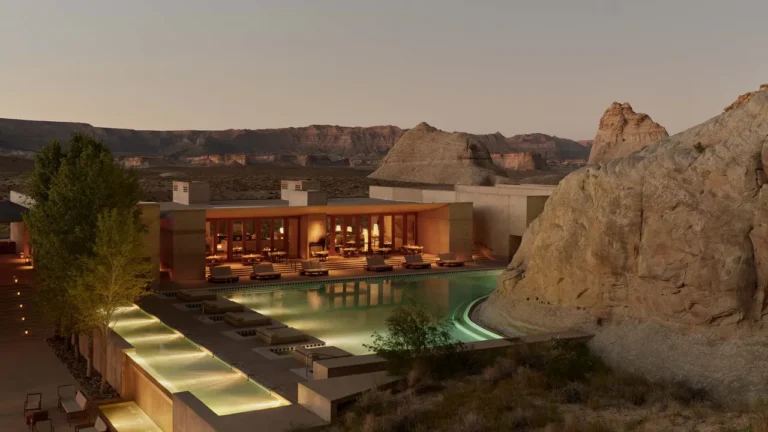
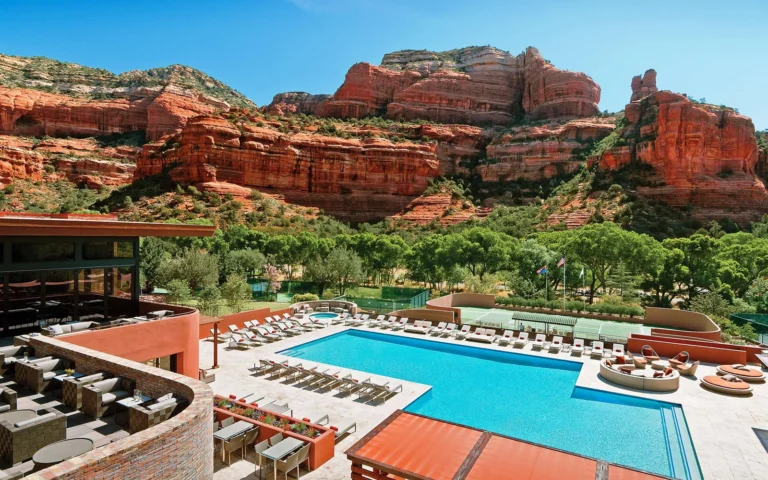
The decision should follow a “Constraint-Based Audit.” Notably, the “Arid/Desert” model (e.g., Sedona or Amangiri) outperforms other environments for individuals suffering from “Cognitive Congestion.” In these locations, the landscape offers high “Prospect” through wide, unobstructed views. Specifically, research shows that these expansive vistas actively lower amygdala activation. Consequently, the desert environment facilitates a rapid neurological reset. Indeed, this structural choice transforms a passive view into a clinical intervention. If the issue is “Metabolic Sluggishness,” the “High-Alpine” model provides the necessary physiological “Push” through mild hypoxic stress.
Detailed Real-World Scenarios
The “Executive Burnout” Reset
A high-frequency professional in New York seeks a 72-hour reset.
-
The Logic: Minimizing “Travel Friction.” Choosing a high-tier Urban Sanctuary within 2 hours of the city rather than a 12-hour flight to a tropical beach.
-
The Strategic Tool: Using “Neuro-Acoustic Sleep Suites” to bypass the 24-hour wind-down period.
-
Failure Mode: Attempting to work “just an hour a day” from the hotel lounge, which prevents the prefrontal cortex from entering the “Default Mode Network” necessary for repair.
Post-Pathogen Immune Recovery
An individual seeking to rebuild systemic health after a period of illness.
-
The Choice: A “Coastal/Marine” destination with an emphasis on “Thallasotherapy” (seawater treatments).
-
The Decision Point: Ensuring the facility has a resident MD or Nutritionist to govern the “Mineral Load” of the treatments.
-
Second-Order Effect: Improved “Lymphatic Drainage” leading to better cognitive clarity and reduced joint inflammation 14 days post-stay.
Planning, Cost, and Resource Dynamics
The economics of wellness travel are increasingly focused on “Resource Access” rather than “Surface Luxury.”
| Resource | Direct Cost (Per Stay) | Opportunity Cost | Strategy |
| Private Bio-Hacking | $1,200 – $5,000 | 4 hours of treatment time | Seek “Integrated” packages |
| Dietary Governance | $200 – $600 / day | “Social Dining” freedom | Opt for “Metabolic Menu” |
| Travel Logistics | $1,000 – $10,000 | 12 – 24 hours of rest | Use “Zero-Friction” transfers |
The “Cost of Silence”
One must account for the “Privacy Premium.” In 2026, the most expensive commodity is “Absolute Silence.” Hotels that can guarantee a decibel level below 30dB in guest suites will command a 40% premium over those that cannot. When evaluating spa hotel vacation planning tips, the most critical financial advice is to allocate budget toward “Quiet” rather than “View.”
Tools, Strategies, and Support Systems
-
Circadian Lighting Governance: Using “Amber-Spectrum” bulbs and blackout integrity to protect melatonin production.
-
Faraday-Cage Suitcases: Protecting devices from “Signal Load” and ensuring the guest remains “Digitally Dark” during the stay.
-
Vagus Nerve Stimulators: Utilizing handheld devices or specific breathwork protocols provided by the spa to trigger the “Rest-and-Digest” state.
-
Bio-Regional Meal Planning: Pre-stay coordination with the hotel chef to ensure all macros are aligned with the guest’s genetic “Nutrition Map.”
-
Neuro-Acoustic Soundscapes: Spatial audio designed to entrain the brain into Alpha or Theta wave states.
-
“Grounding” Footwear: Shoes designed for forest bathing that allow for electron transfer from the earth to the body.
-
Post-Stay “Integration” Coaching: 30 days of remote support to ensure the habits formed at the hotel survive the return to the “Default World.”
Risk Landscape: The Compromise of “Amenity-Heavy” Resorts
The primary risk in wellness travel is “Service Fragmentation.”
Taxonomy of Risks:
-
The “Social Load” Trap: Resorts that are too large, forcing wellness guests to interact with convention-goers or wedding parties. This “Atmospheric Dissonance” prevents deep recovery.
-
“Pseudo-Wellness” Credentials: Facilities that use “Energy Healing” or “Detox” as buzzwords without clinical oversight or measurable outcomes.
-
Acoustic Contamination: Hidden noise sources like HVAC systems, elevators, or nearby motorized lake traffic that prevent the nervous system from fully down-regulating.
-
Decision Fatigue: A “Spa Menu” that is too long, forcing the guest to make complex choices when they are already in a state of cognitive depletion.
Governance, Maintenance, and Long-Term Adaptation
A successful stay is not an isolated event; it is a “Systemic Intervention” that requires ongoing maintenance.
The “Post-Retreat Integration” Checklist:
-
The 48-Hour Buffer: Did I schedule two days of low-intensity work upon return?
-
The “Anchor” Ritual: Which specific treatment (e.g., cold shower, meditation) will I bring into my daily routine?
-
The Digital Sunset: Am I maintaining the “Light Governance” I learned at the hotel?
Governance also involves the “Review Cycle.” One should audit their wellness destinations every 12 months. Does the “Arid/Desert” model still serve my current stress profile, or do I now need the “Coastal/Marine” model for inflammatory support?
Measurement, Tracking, and Evaluation of Success
-
Leading Indicators: A rise in “Heart Rate Variability” (HRV) and a decrease in “Resting Heart Rate” (RHR) within the first 48 hours of the stay.
-
Lagging Indicators: Sustained “Cognitive Endurance” and improved “Sleep Architecture” 30 days after returning home.
-
Qualitative Signals: A shift from “Reactive Decision Making” to “Proactive Planning” in one’s professional life.
Documentation Example: The “Wellness Passport”
A unified digital record of all treatments, metabolic data, and clinician notes provided by the hotel, allowing the guest to track their “Biological Age” over several years of retreats.
Common Misconceptions and Oversimplifications
-
Myth: “The most expensive hotel is the most restful.” Correction: High cost often goes toward “Social Opulence” rather than “Biological Efficacy.”
-
Myth: “You need at least two weeks for a reset.” Correction: A 72-hour “High-Governance” stay can be more effective than 14 days of “Unstructured Leisure.”
-
Myth: “Detox means starving.” Correction: True detoxification is about “Nutrient Density” and the removal of “Environmental Toxins” (light, noise, stress), not calorie restriction.
-
Myth: “I can catch up on sleep at the hotel.” Correction: You cannot “catch up” on sleep; you can only “Reset the Rhythm.”
-
Myth: “All natural water is healing.” Correction: Mineral content and pH vary wildly; “Hard” water can be inflammatory for some skin types.
-
Myth: “A view of the ocean is enough.” Correction: You need “Direct Access” and “Acoustic Proximity” to benefit from marine aerosols.
Conclusion: The Synthesis of Utility and Stillness
The evolution of the spa hotel vacation planning tips landscape reflects a broader cultural shift toward “Objective Vitality.” As the world becomes louder and more fragmented, the ability to selectively retreat into a “Governed Environment” is the ultimate competitive advantage. The modern traveler is no longer a tourist; they are a “System Manager” responsible for the maintenance of their own biological infrastructure.
Ultimately, success occurs when the “Vacation” ceases to be a mere escape. Instead, the experience becomes a profound “Alignment.” Consequently, this shift transforms a reprieve into a systemic recalibration. Notably, the traveler no longer flees their reality. By doing so, they actively integrate their environment with their biological needs.Alignment.” By utilizing the mental models of Allostatic Load and Sensory Buffering, and by prioritizing “Resource Integrity” over “Surface Luxury,” the discerning traveler ensures that their time away translates into a sustained increase in human potential. The luxury is not the robe; it is the clarity of the mind that emerges from it.