Best Hot Spring Hotels United States: An Editorial Guide to Geothermal Wellness
The American landscape is home to a subterranean network of geothermal activity that has, over the last two centuries, transitioned from a raw natural resource into a sophisticated pillar of the wellness industry. Within the United States, the development of high-tier lodging around these thermal vents represents a unique intersection of geological chance, architectural heritage, and clinical intervention. Unlike standard luxury hotels, which rely on manufactured amenities, the premier geothermal destination is defined by its “Primary Asset,” the mineral-rich, naturally heated water that emerges from the Earth’s crust.
In 2026, the sector is experiencing a “Medicalized Renaissance.” Travelers are no longer seeking a simple “soak”; they are pursuing “Transdermal Therapy.” This involves a rigorous selection process based on the chemical signature of the water, whether it be lithium-rich for neuro-regulation or sulfur-dense for integumentary health. The best institutions have responded by evolving into “Integrated Thermal Resorts,” where the hydrotherapy circuit is synchronized with modern diagnostic tools, nutritional science, and circadian-rhythm management.
For the analytical traveler, the challenge lies in distinguishing between a “Hot Spring Tourist Trap” and a “Geothermal Authority Asset.” This distinction is not merely a matter of price, but of “Resource Integrity.” Does the hotel manage the flow-through of the water to maintain its raw mineral potency? Is the staff trained in the physiological protocols of thermal contrast? This article provides the definitive framework for evaluating ttop tierier of the American geothermal market, deconstructing the engineering of heat and the systemic benefits of mineral immersion.
Understanding “best hot spring hotels united states.”
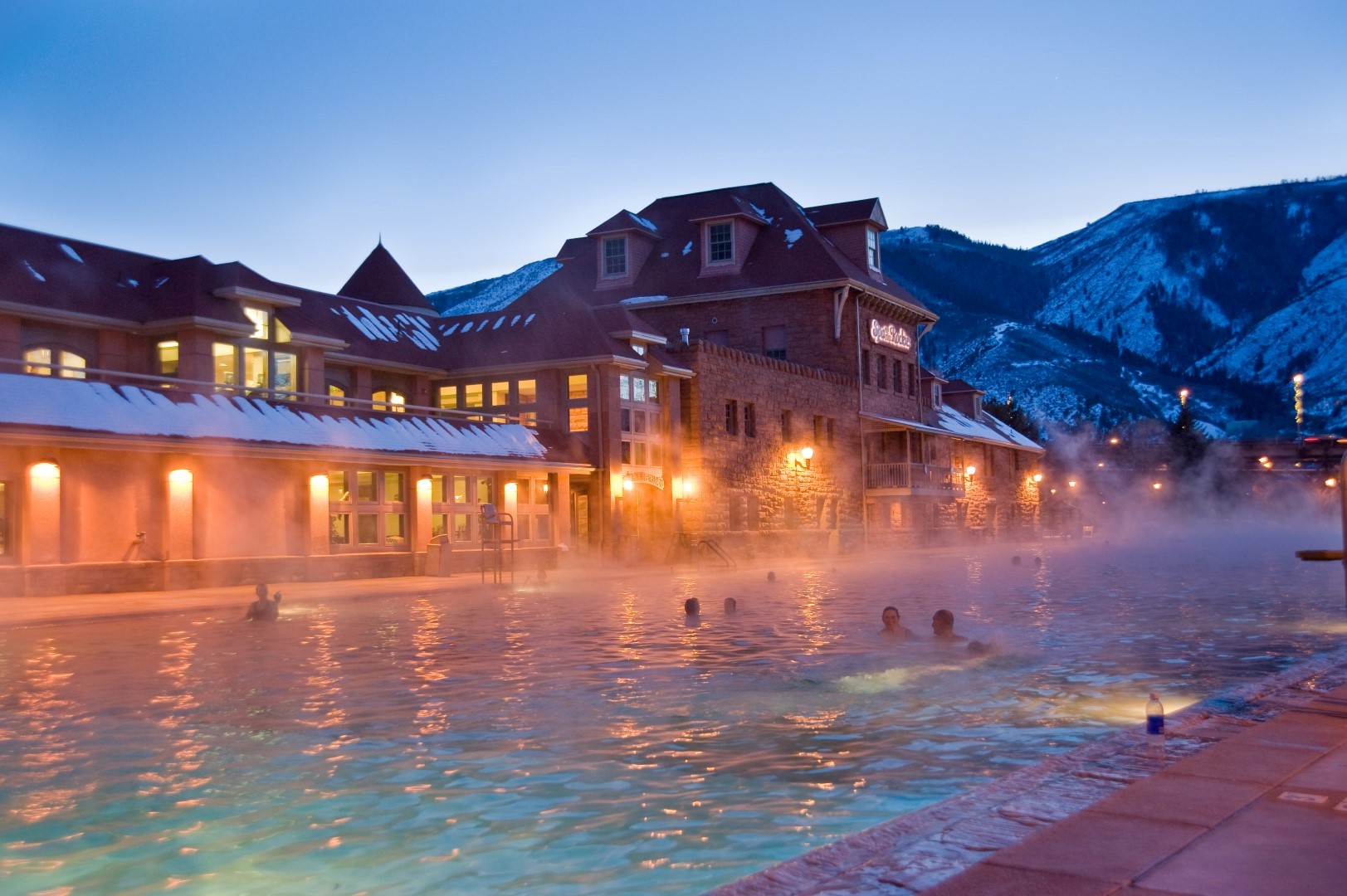
To define the best hot spring hotels in the United States, one must first discard the aesthetic metrics that dominate standard travel media. In this sector, “Best” is a function of “Mineral Bioavailability” and “Thermal Governance.” A common misunderstanding among domestic travelers is the assumption that any heated pool labeled “mineral” provides therapeutic value. In reality, many facilities recycle water or dilute it with municipal supplies to manage volume, effectively neutralizing the curative properties found in the source.
The risk of oversimplification arises when “Luxury” is conflated with “Efficacy.” A five-star resort with a mediocre, chlorinated hot spring pool is inherently inferior to a rustic, masterfully managed “Flow-Through” facility where the water is never chemically treated. The elite tier of the US market solves this by utilizing “Gravity-Fed” or “Direct-Well” systems that preserve the delicate balance of dissolved solids such as calcium, magnesium, and lithium at their natural emergence temperatures.
Effectively navigating this market requires a “Balneological Perspective,” the study of the therapeutic effects of bathing. One must evaluate a hotel’s “Soaking Density” (the ratio of pools to guests) and its “Atmospheric Purity” (the ability to maintain silence and steam-clearing airflow). When these elements are integrated, the hotel ceases to be a lodging property and becomes a “Biophysical Sanctuary.” Understanding this operational depth is the primary factor for ensuring that the guest’s intent,t be it musculoskeletal recovery or cognitive down-regulation, aligns with the facility’s geological reality.
Deep Contextual Background: From Sacred Grounds to Presidential Spas
The history of American geothermalism is a trajectory from indigenous veneration to European-style “Grand Spas.” Long before the arrival of colonial settlers, tribes such as the Ute in Colorado and the Apache in Arizona utilized these springs as neutral territories for healing and diplomacy. These sites were viewed not as commodities, but as “Living Waters” with spiritual agency.
The 19th-century “Sanatorium Era” introduced the European model of the “Cure.” Towns like Hot Springs, Arkansas, and Berkeley Springs, West Virginia, became the first hubs of American wellness tourism. These destinations were designed for “The Long Stay,” typically 21 days,s where the “Bathing Regime” was a medical prescription. This era reached its peak with properties like The Omni Homestead in Virginia, which hosted 24 U.S. presidents, cementing the idea of the hot spring hotel as a site of political and social power.
Today, we are in the “Functional Geothermal” era. Modern travelers are utilizing the best hot spring hotelin the United States as high-tech recovery labs. The current trend involves “Bio-Stacking,” combining natural mineral soaking with interventions like cryotherapy, red light therapy, and guided neurofeedback. This evolution reflects a shift in the American psyche: we are moving away from passive leisure and toward active “Systemic Maintenance,” using the Earth’s heat to counter the friction of a digital existence.
Conceptual Frameworks: The Mineral-Heat-Gravity Triad
To evaluate a hot spring property, one should apply the following mental models:
1. The “Flow-Through” Integrity Index
This model measures how much the water is altered between the “Source” and the “Soak.” The highest tier of hotels utilizes a “Single-Pass” system: water emerges from the earth, flows into the pool, and exits to the landscape or a greywater system without recycling or heavy chlorination. If a facility “re-circulates,” it is functionally a heated swimming pool, not a therapeutic spring.
2. The “Thermal Contrast” Hierarchy
The physiological benefit of hot springs is maximized when the body is subjected to “Contrast Stress.” A premier hotel must provide a “Thermal Ladder” pool,s ranging from “tepid” ($85^\circ\text{F}$) to “thermal” ($104^\circ\text{F}$) and, critically, a “Cold Plunge” ($50^\circ\text{F} – 60^\circ\text{F}$). Without the cold element, the guest risks “Vasodilation Fatigue” rather than “Vagal Reset.”
3. The “Geochemical Blueprint.”
Every spring has a “Signature.” A hotel in the Desert Southwest may be rich in Lithium (mood-stabilizing), while a spring in the Cascade Mountains may be high in Silica (skin-smoothing). An informed traveler matches their specific biological deficit to the spring’s chemical profile.
Key Categories of Geothermal Lodging
Selection depends on the “Operational Ingredient” of the facility.
| Category | Primary Region | Water Signature | Operational Trade-off |
| High-Tier Heritage | VA, AR, WV | Bicarbonate-rich; Historically grand | Formal dress codes; Older infrastructure |
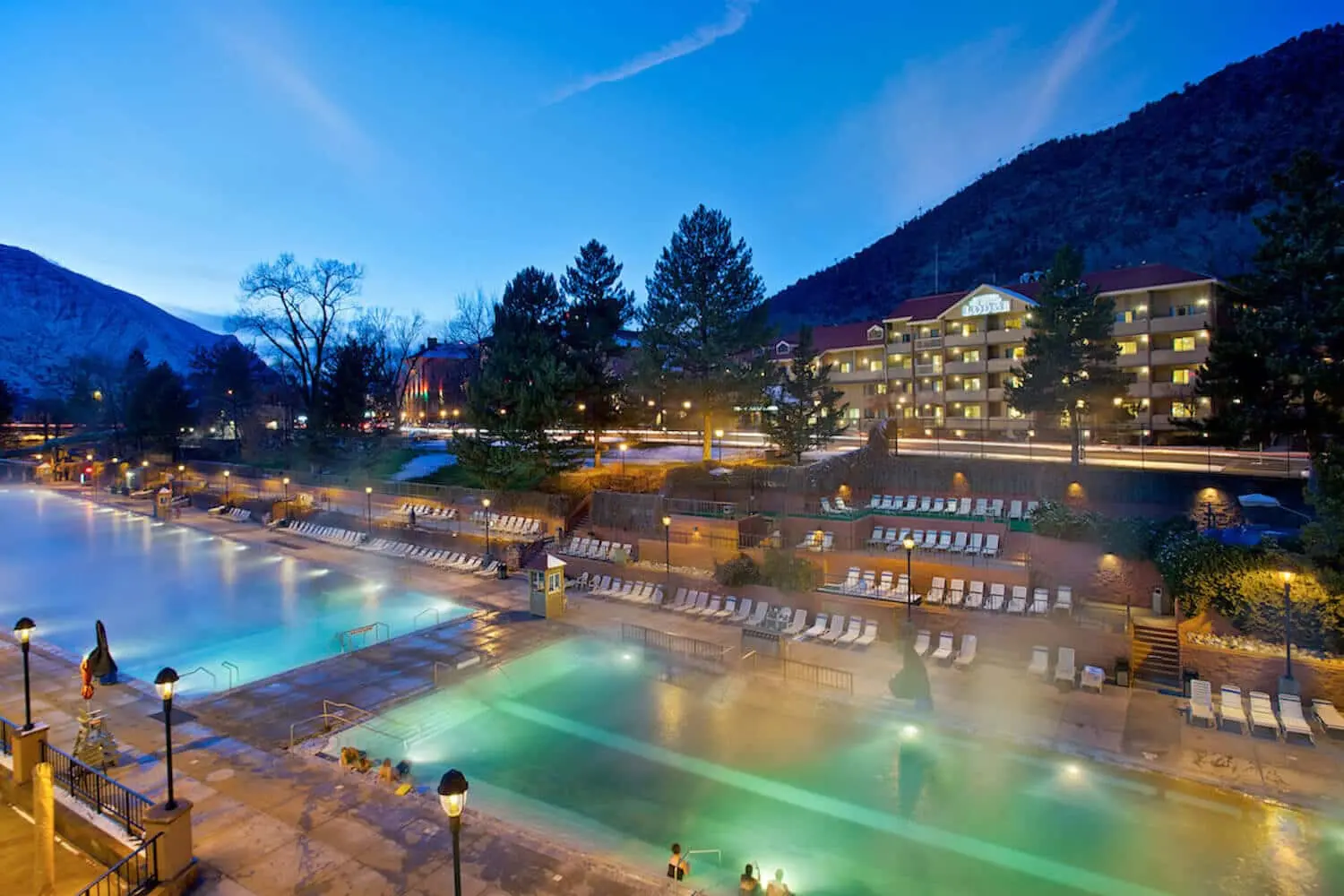
| Alpine Mineral Lab | CO, MT, ID | Sulfate-dense; Mountain views | Altitude risk; Seasonal crowding |
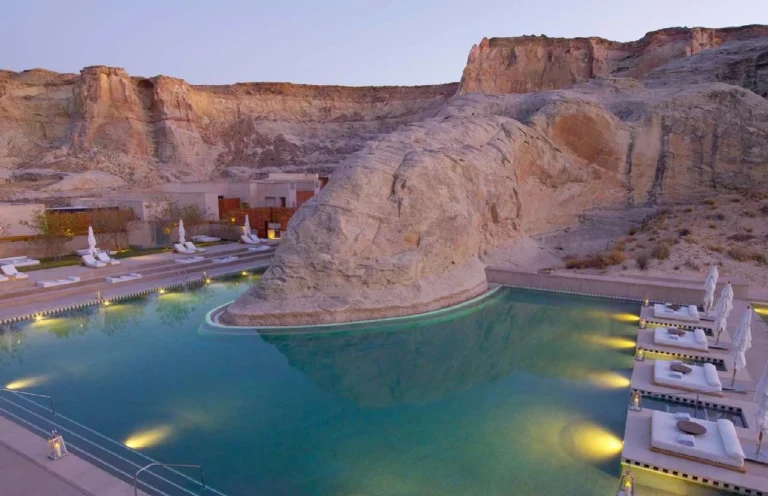
| Desert Canyon Oasis | AZ, NM, CA | Lithium & Silica-rich; Remote | High heat in summer; Arid environment |
| Modern Soaking Hub | CO, CA | Varied temps; High-tech spas | High social density; Urban noise |
| Rustic Immersion | AK, OR, WA | Raw “off-grid” feel; High heat | Limited amenities; Difficult access |
Realistic Decision Logic
The decision should follow a “Nervous System Audit.” If a guest is in a state of “High Cortisol/Anxiety,” the Lithium-rich Desert Canyon Oasis (e.g., Castle Hot Springs) is the logical choice. If the goal is “Athletic Recovery,” the Sulfate-heavy Alpine Lab (e.g., The Springs Resort in Pagosa) provides the muscle-repair chemistry required.
Detailed Real-World Scenarios
The “Digital Burnout” Recovery in the Southwest
A professional seeks to disconnect from a hyper-connected role.
-
The Choice: A remote, canyon-based hotel where the architecture blocks cell signal.
-
The Tool: 20-minute soaks in 102°F lithium-rich water, followed by a 2-minute cold plunge and 10 minutes of “Horizontal Rest.”
-
Failure Mode: If the guest brings a device to the pool, the blue light and social triggers prevent the brain from entering the “Alpha State” facilitated by the water.
Post-Operative Joint Recovery at a Heritage Spa
An individual utilizes a Virginia-based hotel for post-surgical rehabilitation.
-
The Logic: Using the buoyancy of a 98°F “warm pool” to perform low-impact range-of-motion exercises.
-
Decision Point: Choosing a facility with “In-Pool Clinicians” who understand the physics of mineral water resistance.
-
Second-Order Effect: Reduced reliance on analgesic medication due to the natural anti-inflammatory effects of the sulfur and sodium bicarbonate.
Planning, Cost, and Resource Dynamics
The economics of the best hot spring hotels united states involve high “Geothermal Maintenance” costs.
| Expense Factor | Range (Per Night) | Included Resources | Hidden Costs |
| Luxury Integrated | $1,200 – $2,500 | All meals, guided soaks, labs | Service fees (20-25%) |
| Mid-Tier Historic | $400 – $800 | Room, 24h pool access | “Pool Use” day fees |
| Boutique Mineral | $300 – $600 | Room, spa discount | Parking; Breakfast surcharges |
Indirect Costs: The “Mineral Wear”
Travelers must account for the “Physical Toll” on their gear. High-mineral water (specifically sulfur) will tarnish silver jewelry and degrade the elasticity of standard swimwear. The most prepared guests utilize “Mineral-Resistant” gear or dedicated “Spa Wear” that is retired after the trip.
Tools, Strategies, and Support Systems
-
Hydration Management: High-mineral soaking iOsmoticoti,c” it pulls water out of the body. Elite hotels provide electrolyte-rich infusions at the poolside to prevent “Thermal Dehydration.”
-
The “Kneipp” Walk: Shallow pools with smooth river stones at the bottom, designed to stimulate foot reflexology points while the water alternates between hot and cold.
-
Watsu (Aquatic Massage): A therapist-led movement session in 95°F water, focusing on spinal decompression.
-
Acoustic Clearing: Use of underwater speakers or resonant architecture to facilitate “Sound Bathing” while floating.
-
Mineral Concentration Maps: Documentation provided by the hotel showing the exact ppm (parts per million) of minerals in each pool.
-
“Silent Soak” Hours: Operational rules that ban talking in specific high-temperature pools to allow for deep meditation.
-
Post-Soak “Dry Wrapping”: A strategy where the guest is wrapped in heated linens after a soak to prolong the “Thermal Bloom” and allow minerals to absorb into the skin.
Risk Landscape and Failure Modes
The primary risk in geothermal travel is “Hydro-Thermal Overload.”
Taxonomy of Risks:
-
Osmotic Dehydration: Losing electrolytes through the skin faster than they can be replaced, leading to “Spa Headaches.”
-
Acoustic Pollution: The “Splash Factor” of children or loud groups in a space designed for contemplative healing.
-
Source Contamination: A failure in the “Flow-Through” system that allows bacteria to thrive in the warm environment.
-
The “Chlorine Mask”: Resorts that claim to be “Natural” but use high levels of chlorine to compensate for poor water management, stripping the water of its biological activity.
Governance and Long-Term Adaptation
To maximize a stay at one of the best hot spring hotelin the United States, the guest must move from “Tourism” to “Therapy.”
The “Balneo” Review Checklist:
-
The “Mineral Log”: Did I soak in the high-lithium or high-sulfur pool? Which one improved my sleep metrics?
-
Contrast Verification: Did I complete at least three “Hot-to-Cold” cycles per day?
-
Home Re-Integration: Can I replicate the “Mineral Load” at home using specific bath salts (e.g., Magnesium Flakes)?
Notably, you must establish specific adjustment triggers to maintain physiological safety. For instance, if you feel dizzy after a soak, you should immediately reduce your next session by five minutes. Furthermore, you must double your electrolyte intake to compensate for the metabolic load. Consequently, these proactive shifts transform a reactive symptom into a managed data point.
Measurement, Tracking, and Evaluation
-
Leading Indicators: Improvements in HRV (Heart Rate Variability) and a decrease in Resting Heart Rate (RHR) over a 3-day stay.
-
Lagging Indicators: Reduced joint pain and improved skin texture (measured by “Glow” or “Hydration levels”) 14 days post-stay.
-
Documentation: A “Thermal Prescription” provided by the hotel’s clinician, outlining the optimal temperatures and minerals for the guest’s specific health profile.
Common Misconceptions and Oversimplifications
-
Myth: “Hotter is better.” Correction: The most therapeutic soaking happens at “Isothermal” temperatures (98°F – 100°F). High heat ($104^\circ\text{F}+$) is a stressor, not a restorer.
-
Myth: “All hot springs smell like eggs.” Correction: Many high-tier springs are “Sodium-Sulfate” dominant, providing the benefits of sulfur without the hydrogen sulfide odor.
-
Myth: “The water is dirty if it’s not crystal clear.” Correction: High mineral content or algae (which thrives in certain geothermal temps) can cloud water naturally while being perfectly safe and beneficial.
-
Myth: “I can fix my skin in one soak.” Correction: Mineral absorption takes time. Clinical results usually require at least three days of consistent immersion.
-
Myth: “Hot springs are just for the winter.” Correction: Summer soaking in “Tepid” springs ($85^\circ\text{F} – 92^\circ\text{F}$) is excellent for lymphatic drainage and heat acclimation.
Conclusion: The Synthesis of Earth and Wellness
The evolution of the hot spring hotel in America represents a return to “Primary Medicine.” In an age of synthetic solutions, the ability to submerge in the raw, mineral-rich heat of the earth is perhaps the ultimate luxury. The best hot spring hotels in the United States are those that act as stewards of this energy, providing the architectural and clinical infrastructure to let the water do its work.
Success in this market occurs when the traveler stops viewing the hotel as a building and starts utilizing it as a conduit. Whether they seek the historic bicarbonate springs of the Blue Ridge or the lithium-charged canyons of the Sonoran, they pursue a profound “Systemic Reset.” The luxury is not the room; it is the feeling of emerging from the water lighter, clearer, and fundamentally recalibrated by the earth itself.